Alithea Biotechnology GmbH
Intelligent immunotherapy – safety ensured
Immunological cell fingerprints are Alithea Bio’s core expertise. The Freiburg-based company combines advanced molecular biology with cutting-edge IT and operates one of the world’s largest immunopeptidomics databases. Alithea Bio leverages this integrated platform to offer both contract research services and software-as-a-service solutions to develop safer and more precise personalised immunotherapies more quickly.
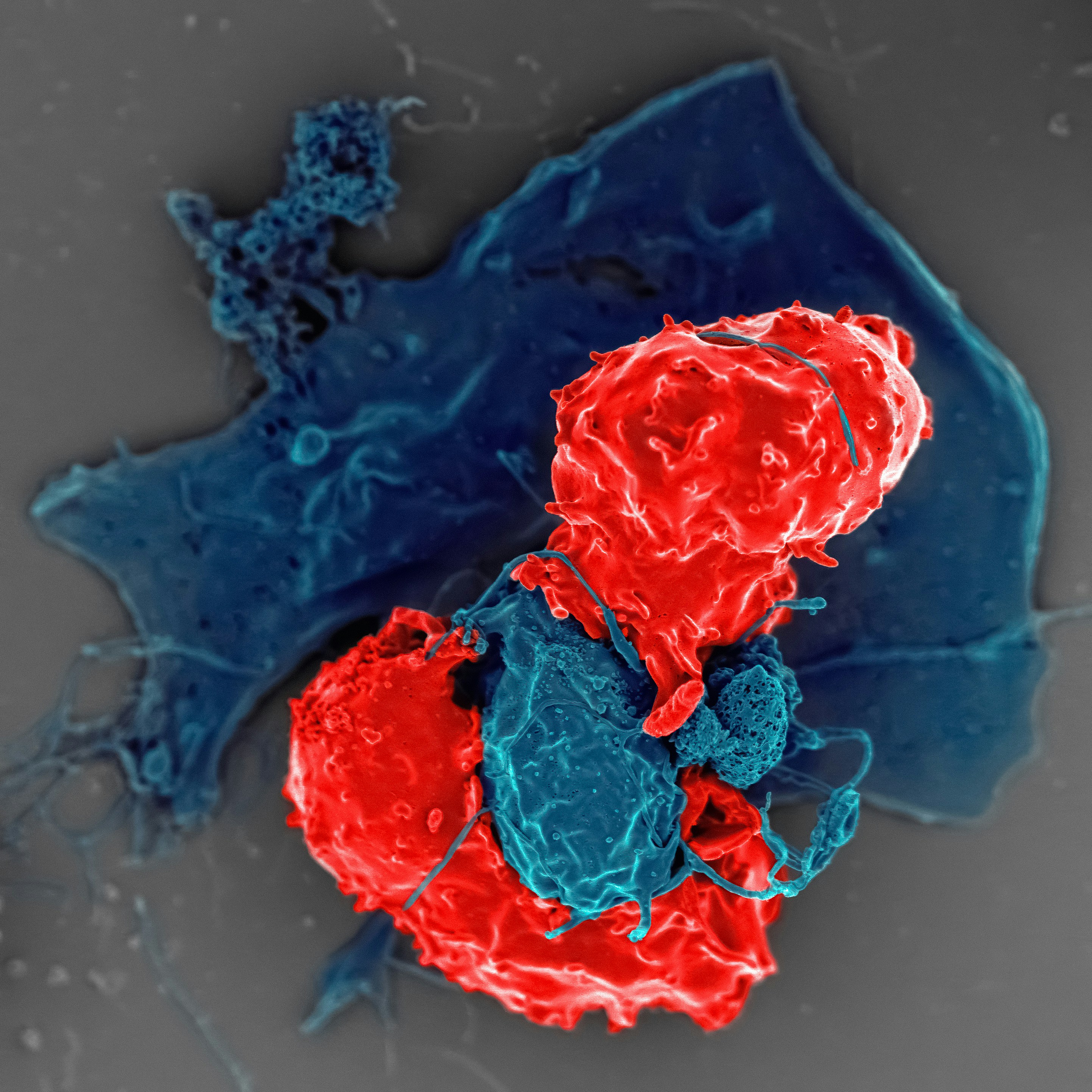 Immune system cells quickly recognise what belongs to the body and what does not, removing any foreign substances in a targeted manner. © National Institute of Allergy and Infectious Diseases on Unsplash
Our immune system continuously patrols the body, eliminating anything that doesn’t belong there. At least, that is it what it does in an ideal world. However, because no living system is flawless and the body is constantly exposed to environmental influences, errors can occur. Damaged or infected cells - caused, for example, by viruses or toxins - may go unnoticed, allowing disease to develop.
How exactly does the immune system distinguish between what belongs to the body and what is altered or foreign - and therefore potentially harmful? Human cells achieve this by using HLA peptides (human leukocyte antigens), which serve as a kind of immunological ‘shop window’ that reveals the cell’s internal state to the immune system. HLA molecules act as ‘presentation platforms’ for very short protein fragments - usually around nine amino acids in the case of HLA class I. These fragments, displayed on the cell surface as HLA-peptide complexes, are visible to specialised immune system T cells. The T cells continuously monitor these peptides, quickly detecting any deviations from the norm. When a peptide is recognised as altered or foreign, the T cells either attack the affected cell directly or trigger an immune response.
Huge quantities of data for T-cell therapy
 Prof. Dr. Tim Fugmann is CSO of Alithea Bio and an immunopeptidomics expert. © Jonas Conklin
HLA peptides thus serve as the central information interface between cells and the immune system, forming a key mechanism of immune surveillance - for example, against cancer. Tumour cells produce abnormal proteins that are displayed on the cell surface via HLA molecules, effectively signalling their presence to T cells. Building on this principle, the field of immunopeptidomics emerged in the early 2000s, enabling us to ‘read’ the cellular ‘shop window’. Using state-of-the-art mass spectrometry and bioinformatics, researchers can now analyse which peptides a cell presents to the immune system - a crucial step towards personalised immunotherapies such as T-cell therapy, which harnesses the body’s own immune cells for medical treatment.
One of the leading experts in this cutting-edge field is technical biologist Prof. Dr. Tim Fugmann, who has spent 15 years studying the HLA system and its peptides - first at the Swiss Federal Institute of Technology in Zurich, and later at a Swiss biotech company. "Everything was very application-oriented, and this approach still influences how I do things," he says. "But I quickly realised that you need data beyond science. At some point, founding a company became the next logical step for putting this knowledge into practice." In 2020, Fugmann, together with economist Fanny Giannou, founded Alithea Biotechnology in Freiburg. Originally established as a small entrepreneurial company (UG), it has since become a limited liability company (GmbH) and expanded to include a laboratory in Berlin.
The management team consists of Giannou (Chief Executive Officer, CEO), Fugmann (Chief Scientific Officer, CSO) and co-founder Hagen Grauer (Chief Financial Officer, CFO), along with Armanas Povilionis who, in his role as Chief Technology Officer (CTO), is responsible for IT infrastructure and AI. "We built the company entirely from our own resources," says Fugmann. "Since these were naturally very limited, we were initially only able to generate a small quantity of our own data, but this then grew."
 HLA-Compass is a web-based database containing millions of data points, and is constantly being expanded. © Danny Meneses on pexels
At the heart of Alithea Bio is HLA-Compass, a database and web-based platform that is one of the largest of its kind internationally, with over 17 million data points and more than 10,000 new drug target structures.
"We have built a comprehensive collection of HLA peptides from thousands of samples, which we continue to expand," explains Fugmann. "We also monitor studies globally and integrate their findings. Our customers access this vast resource through a software-as-a-service model, meaning they purchase a single subscription and receive live updates as the dataset grows. The database allows researchers to determine, for example, which peptides appear on specific cells and to identify potential therapeutic targets or risks."
Better medicines through laboratory analyses and software
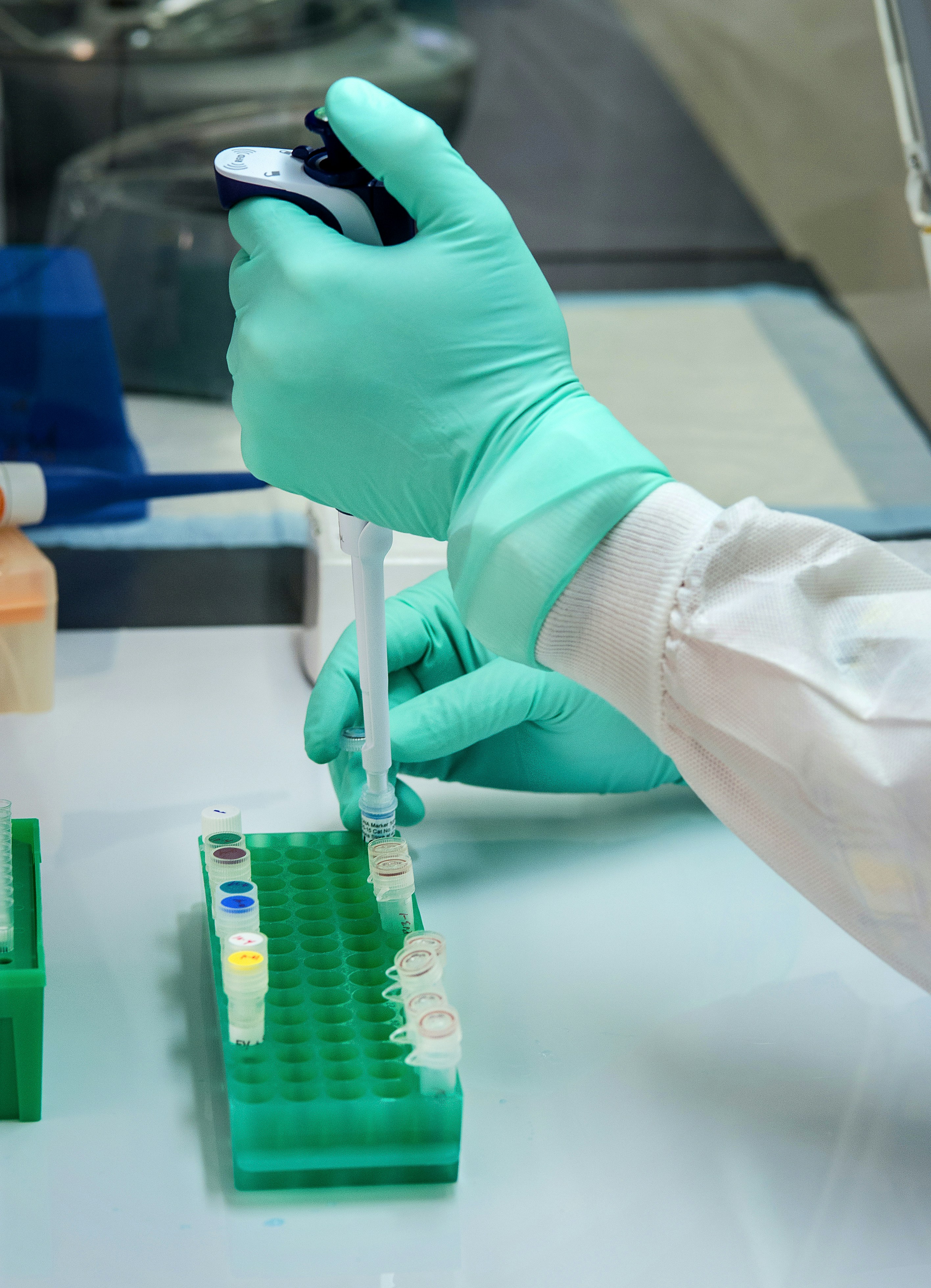 The HLA system and its peptides are Alithea Bio's area of expertise. Laboratory analyses are carried out for testing purposes and evaluated using AI, among other methods. © Public Health Image Library from the Centers for Disease Control and Prevention CDC on Unsplash
In addition to HLA-Compass, Alithea Bio’s team of experts provides traditional contract research, as well as software and analytical tools to support the development of immunotherapies, particularly in cancer research. "For example, a specific peptide that is recognised and targeted by a TCR-T cell1) needs to be identified and validated as a candidate target," explains Fugmann. "This involves verifying that the target is both specific and safe for use in T-cell therapy. Many potential drug candidates are eliminated early because they pose safety risks such as cross-reactivity with cardiac peptides, an issue that has unfortunately led to fatalities in the past.We rely on our extensive datasets to reliably address such safety concerns, and this allows us to provide answers through careful data comparison."
HLA presentation is confirmed by first isolating HLA molecules in the lab and then analysing them with high-resolution mass spectrometry. In addition to identifying the specific HLA type, researchers can determine whether the target peptide is actually presented on tumour cells, along with its frequency and its surface density. These findings are then subjected to a rigorous safety assessment by comparing it with the HLA-Compass database, which contains several million experimentally identified HLA peptides, including many derived from healthy tissues. This addresses critical safety questions, such as: Does the peptide also occur in normal tissues? Are there structurally similar peptides that could be recognised by the same drug candidate? Which organs might therefore be at risk? AI-driven models are used alongside the database, for example, to assess cross-reactivity risks, which are often underestimated. Similar sequences that may go undetected in conventional tests can nonetheless pose a potentially serious threat to TCRs, the expert explains.
Once the analysis is complete, the client receives a clinical classification and an overall assessment. "We do not deliver raw data," the scientist explains, "but clear go/no-go recommendations for further development and preclinical testing. This moves safety decisions from Phase I all the way to the front, which is also financially worthwhile, since a clinical failure can cost the company involved many millions of euros."
In focus: clinical added value
The 15-member team at biotech start-up Alithea Bio is no longer dependent solely on internal resources, having secured external financing through investments, grants and prize funding. The company was recently named AI Champion Baden-Württemberg 2025 and received the CyberChampion Award 2024 as well as the Freiburg Innovation Award 2025. In addition, Giannou was honoured with the Women TechEU Award and is a semi-finalist for the European Prize for Women Innovators.
Alithea Bio is expanding its strategy to include methods for enriching and analysing HLA molecules in blood. This advancement could enable liquid biopsy applications - detecting biomarkers from body fluids - and, together with HLA-Compass, identify novel biomarkers. "This is one of our major future priorities: further enhancing clinical value," says Fugmann. "For instance, we aim to use population-based approaches and digital twins derived from clinical samples to determine whether a particular drug is suitable for a patient - even if it was originally developed for a different indication. Clinicians are understandably very interested in these approaches. We are already close to being able to provide such insights, though several regulatory hurdles remain."
Note:
1) A TCR-T cell is a genetically engineered T cell that expresses a specific T-cell receptor (TCR), enabling it to recognise and target diseased cells with precision.
