Panosome GmbH – a parasite as the basis for innovative immunotherapies
Reaching the unreachable: new approaches to challenging drug targets
Modern medicines act with remarkable precision. Antibodies, for example, recognise their molecular targets much like a key fits into its corresponding lock. However, not all therapeutic targets can be accessed using this principle. Small molecules, carbohydrates and certain other molecular structures remain difficult to target with conventional antibody-based approaches. It is precisely these therapeutic blind spots that the start-up Panosome aims to eliminate with a novel immunotherapy platform that harnesses one of nature's most sophisticated masters of immune evasion: trypanosomes.
The single-celled parasite Trypanosoma brucei is a remarkable parasite. Two of its subspecies cause African sleeping sickness in humans. Its extraordinary survival strategy is based on continuously changing the proteins on its surface – much like repeatedly changing coats to avoid recognition. However, this is a sophisticated survival strategy rather than a reaction to environmental conditions, allowing the parasite to evade the human immune system. Each new surface presents the immune system with a different target, triggering a fresh immune response. Once the parasite has been recognised, it simply switches to another 'cloak' forcing the body's immune defences to start fighting all over again.
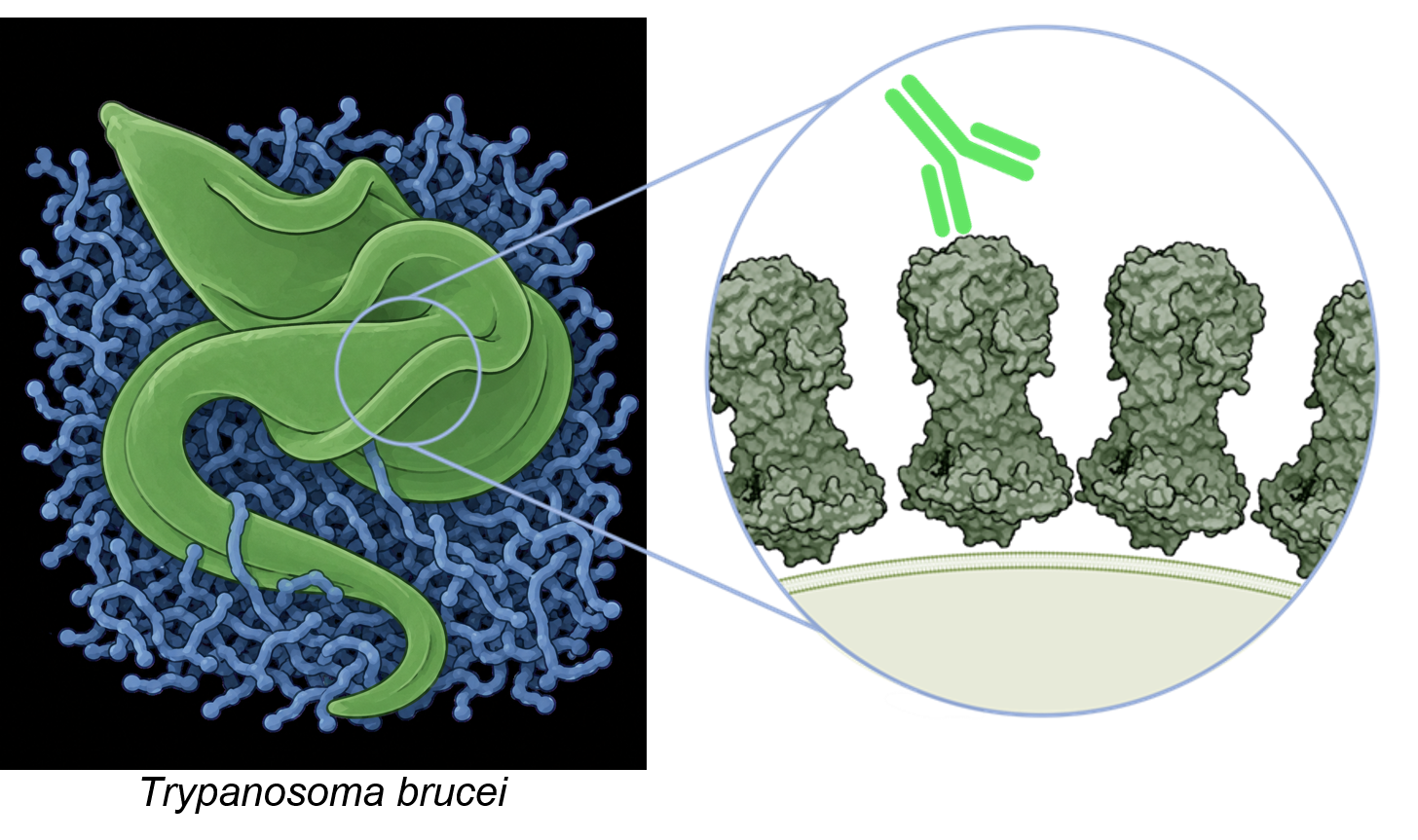 An evolutionary arms race unfolds: the parasite continually disguises itself by changing its surface proteins, while the immune system responds by producing new antibodies. Eventually, however, the pathogen gains the upper hand, the body’s defences begin to fail, and the organism becomes so exhausted that it starts to sleep. © Panosome
Strictly speaking, the trypanosome's surface is not a camouflage cloak, which is how it is often described, but the result of a sophisticated evolutionary strategy. The parasite's surface is densely covered in around 10 million copies of a single protein – the variant surface glycoprotein (VSG) – which exists in more than 2,000 different variants. When the parasite changes its 'cloak', it simply presents a new variant to the immune system. Each variant is highly immunogenic, meaning the immune system reacts very strongly to it.
Although this strategy is remarkably effective from an evolutionary perspective, the molecular mechanisms underlying this survival strategy remained poorly understood for many years. Major advances have only been made over the past few decades, with immunologist Prof. Dr. Nina Papavasiliou making seminal contributions to the field. Together with her team at Rockefeller University in New York, she elucidated key mechanisms by which T. brucei continuously switches between different VSG variants, and demonstrated how this process could be exploited to develop novel therapeutic approaches against African sleeping sickness. The researchers developed a molecular biological strategy that locked the parasite into expressing a single VSG variant, thereby preventing the otherwise continuous switching of its surface proteins.
Concentrated antigen presentation thanks to the trypanosome surface
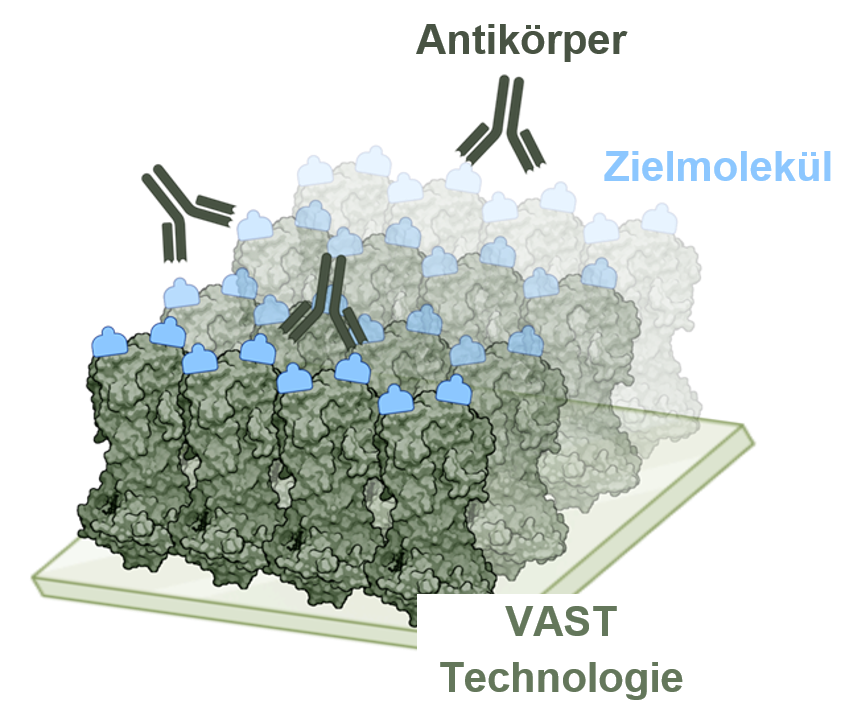 Principle of the VAST technology: The parasite surface serves as a presentation platform. Target molecules attached to the surface activate the immune system and induce the production of specific antibodies. © Panosome
These findings inspired the idea of harnessing the trypanosome's extraordinary immunogenicity for medical applications, including as a platform for vaccines and therapeutic antibodies. The researchers pursued this concept by developing a novel strategy for generating therapeutic antibodies, for which they received the prestigious Transformative Research Award from the US National Institutes of Health (NIH) in 2011. The project provided proof of principle for what is now known as VAST (VSG immunogen array by sortase tagging). In 2016, Papavasiliou brought the technology to Germany, where she continued to develop it at the German Cancer Research Centre (DKFZ). Four years later, she and infectious disease biologist Dr. Joey Verdi founded the Heidelberg-based start-up Panosome, which today employs 13 people.
But how does the VAST platform work? First, researchers select the target molecule against which antibodies are to be generated. Using the enzyme sortase – a molecular 'glue' – the target molecule is covalently attached to the parasite's variant surface glycoproteins (VSGs). This creates a densely packed surface displaying millions of identical copies of the antigen. Such highly repetitive antigen presentation triggers an exceptionally strong immune response, stimulating the production of highly specific antibodies.
Antibodies against fentanyl may protect against overdose
The proof of concept has now been established. The first application of the VAST platform focused on generating antibodies against fentanyl, a highly potent synthetic opioid that has played a major role in the opioid crisis in the United States. "At the time, fentanyl was barely an issue in Europe," explains Dr. Katharina Urban, Head of Business Development and Investor Relations at Panosome. "In the US, however, the crisis remains unresolved. Even more concerning is the fentanyl analogue carfentanil, which is approximately 5,000 times more potent than heroin and active at extremely low doses. Because of its extraordinary potency, it has also been investigated as an aerosolised incapacitating agent for military purposes."
The challenge with fentanyl and its analogues is that, although an antidote in the form of naloxone is available, the therapeutic window is very narrow. In the event of a fentanyl overdose, naloxone must be administered immediately. However, because its half-life is shorter than that of many opioids, repeated administration may be necessary. "Fentanyl is a very small molecule that the immune system largely ignores because it is not naturally equipped to recognise molecules that are so small in size," explains Urban. "Our goal was therefore to generate antibodies capable of specifically recognising these otherwise overlooked molecular structures."
The strategy proved successful. Using the VAST platform, the Panosome team generated a highly active and specific antibody whose efficacy was demonstrated in preclinical studies. "Mice were immunised with the platform displaying a fentanyl fragment on its surface," explains Urban. "One of our most promising antibody candidates also showed strong activity against carfentanil." Although the antibody cannot prevent addiction itself, it has the potential to protect against fatal overdoses. "It could buy valuable time for people seeking to overcome addiction. The antibody acts like a molecular sponge: it does not cross the blood–brain barrier but binds and neutralises the drug in the bloodstream, thereby creating a concentration gradient that draws the drug away from the brain."
What initially appeared to be a promising breakthrough, however, soon reached an impasse. "Around two years ago, we paused further development of the antibody because we lacked a major industrial partner capable of advancing the therapy into clinical development. For a small start-up, it is simply not financially feasible," says Urban. The technology's dual-use potential has now opened up new perspectives. In addition to its potential use in preventing fatal overdoses, the antibody could also have applications in defence and emergency preparedness. One possible scenario would be to administer the antibody prophylactically to military personnel before deployment, where protection against carfentanil exposure could potentially last for up to one month. "Unfortunately, the current geopolitical situation is making such scenarios increasingly relevant," Urban adds. Panosome is now preparing for an initial meeting with the US Food and Drug Administration (FDA).
Oncological immunotherapy on the cusp of clinical application
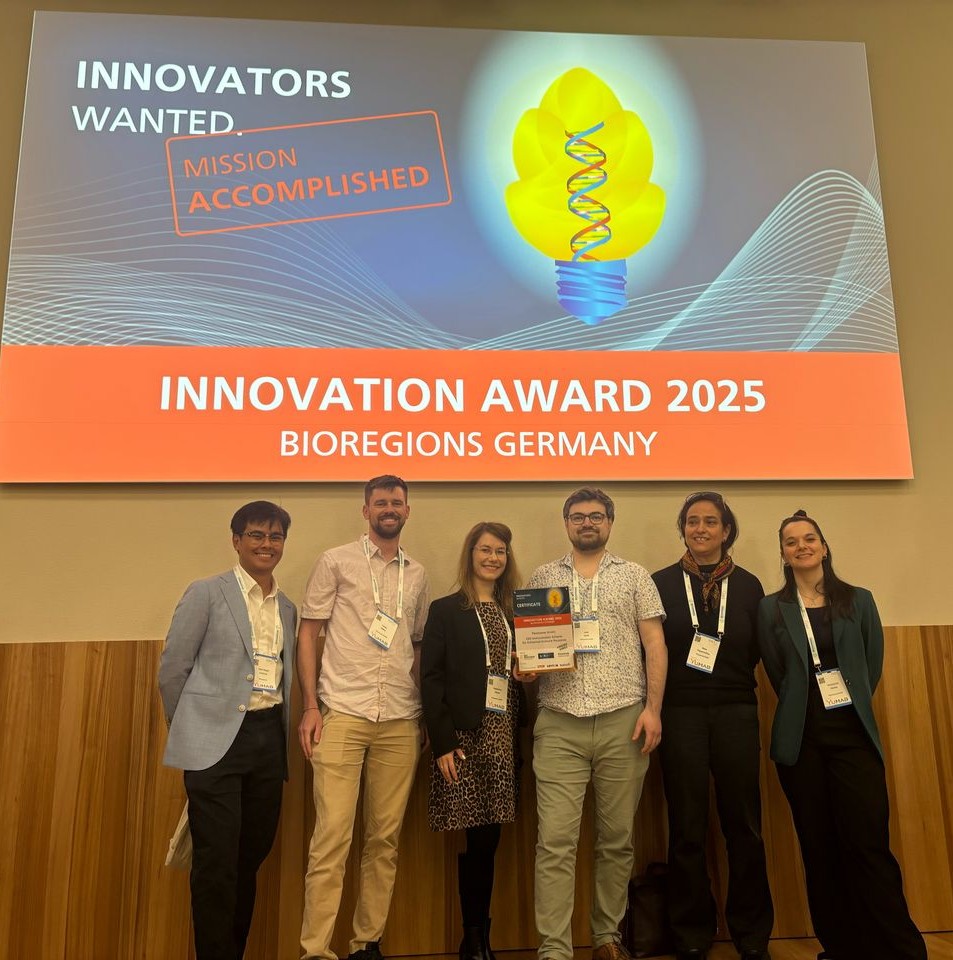 Among other awards, Panosome received the People's Choice Award at the 2025 BioRegions Innovation Awards. Left to right: Dr. Jose Paulo Lorenzo, Dr Colin Miller, Dr Katharina Urban, founder Dr. Joey Verdi, co-founder Prof. Dr. Nina Papavasiliou, and Dr. Anastasia Gkeka. © Panosome
The team has since launched two oncology programmes in collaboration with research groups at the DKFZ. One focuses on diffuse midline glioma (DMG), a rare and highly aggressive paediatric brain tumour for which no effective treatment currently exists. "The disease is driven by a well-characterised mutation in a histone protein, and our antibody is designed to specifically recognise this altered structure," explains Urban. A second programme targets the glycoprotein mucin 1 (MUC1), which is present in an altered form on the surface of many tumour cells. The immunotherapy is directed against this tumour-specific variant. "It consists of a truncated carbohydrate structure linked to a peptide sequence. This molecular signature is found in up to 80 percent of solid tumours, including pancreatic and ovarian cancer, where effective treatment options remain limited." Accordingly, the initial focus is on these tumour types. The first pilot studies are already underway. "One candidate is already providing promising results," says Urban. "However, MUC1 offers several possible binding sites, and we are now identifying the most suitable one." By targeting fentanyl, MUC1 and DMG, the researchers have demonstrated that the VAST platform can generate antibodies against an exceptionally broad range of molecular structures – from small molecules and carbohydrates to single amino acid substitutions. "Our strength lies in tackling precisely these difficult-to-target structures."
The next milestone is to bring the VAST platform into a clinical setting – and that will require substantial investment. "Our goal is to demonstrate that it is possible to generate these antibodies and translate them into clinical applications," says Urban. The company's immediate focus is the MUC1 programme, with the aim of advancing it to at least a Phase I clinical trial and thereby validating the platform in humans. To date, Panosome has been financed through research grants, angel investment and licensing revenues. Moving into clinical development, however, will require additional funding. The remaining preclinical and regulatory preparations are expected to take around two years. If sufficient investment can be secured, the first clinical trial could begin in 2029.
