FlareOn Biotech - fluorescence-guided tumour margin detection
A sensor designed to visualise residual tumour tissue during surgery
In order to safely remove tumours in the head and neck region, surgeons must be able to reliably distinguish diseased tissue from healthy tissue. FlareOn Biotech, a start-up based in Frickenhausen, has developed a biochemical sensor capable of visualising tumour cells in tissue samples directly in the operating theatre within just ten minutes. The company is now seeking partners to help bring its diagnostic platform to market.
In head and neck surgery, a new concept is gaining prominence: a sensor designed to help surgeons determine intraoperatively whether any tumour tissue remains. This enables more precise resections and may reduce the need to remove additional surrounding tissue as a precautionary measure. "When removing tumours in the head region, every millimetre of tissue that can be preserved counts, as it helps minimise impacts on essential functions such as speaking, swallowing and breathing," explains Dr. Anna Herrmann, Managing Director of the start-up FlareOn Biotech.
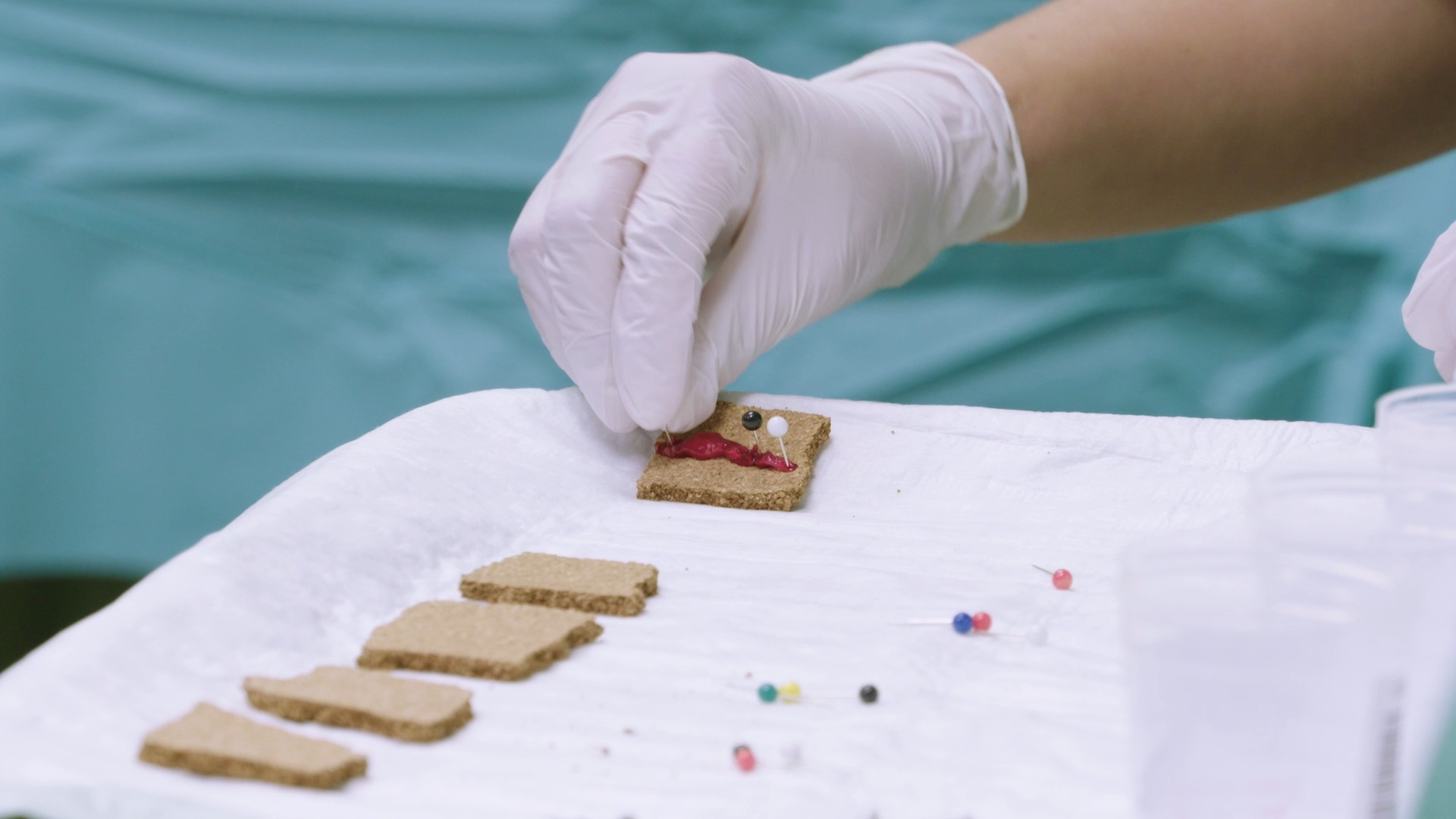 Tissue samples are analysed using the so-called frozen section technique. © FlareOn Biotech GmbH
The current clinical standard for defining tumour margins is known as a frozen section. This is a procedure in which tissue samples are removed from all sides around the tumour, mounted on cork slides, and examined pathologically for any residual tumour. This requires time-consuming coordination between the surgical team and the pathology department to ensure that the results, which are available in around fifty minutes, can be precisely matched to the specific sample sites. Multiple sections in a single direction are often required in order to check if all the cancer has been completely removed. As only a rapid analysis method can be used in the operating theatre, the current technique is prone to error. In between twelve and twenty percent of cases, a second operation is required.
“High-tech in development – low-tech in application”
The new sensor system enables tissue samples to be analysed directly in the operating theatre. This point-of-care diagnostic procedure is performed during surgery and does not require expensive equipment or specialist expertise. "High-tech in development – low-tech in application," says Dr. Anna Herrmann. A small sample vessel containing a liquid with the biochemical sensor and UV light is sufficient to analyse tissue on site within around ten minutes. The sensor renders tumour cells visible through a colour change and is based on a specific peptide sequence labelled with a fluorescent dye at one end and a quencher at the other. It reacts to tumour-associated proteases – enzymes that break down proteins and enable tumours to grow and spread. In the absence of these proteases, the quencher suppresses fluorescence due to its close proximity to the dye molecule. The presence of tumour proteases leads to their binding with the sensor, resulting in an increased distance between the dye and the quencher, which subsequently generates a signal. In short: tumour tissue glows under UV light, while healthy tissue remains dark. The advantages of the new diagnostic system are clear: it reduces time spent in the operating theatre, therefore reducing the cost as well as the risks associated with anaesthesia, particularly for older patients. The aim is to reduce the need for follow-up surgery – or ideally avoid it altogether – and remove tumours while preserving as much healthy tissue as possible.
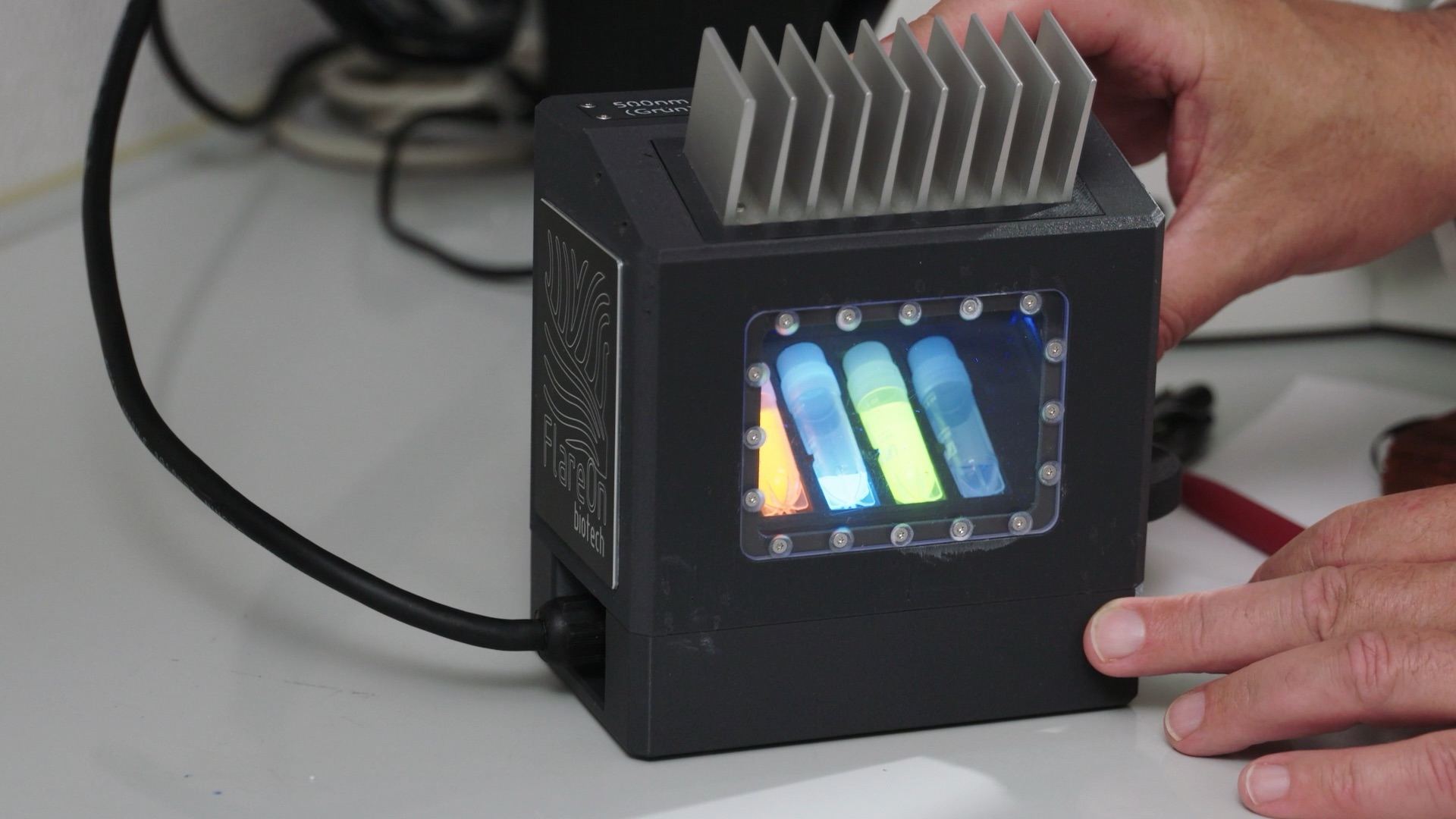 The sensor triggers a colour reaction: tumour cells glow under UV light, whereas healthy tissue does not react and therefore does not glow. © FlareOn Biotech GmbH
The sensor was developed by an interdisciplinary team that specialises in chemistry, biotechnology and surgery, using oral squamous cell carcinoma as a model to demonstrate how the technology can be applied in practice. Herrmann emphasises that feasibility has so far been primarily evaluated in the head and neck region, where tissue-sparing surgery is particularly critical. Further research is underway to determine whether other tumour types can be detected using a similar sensor approach. The team is also working on advancing the technology beyond its current form. In addition to the existing application – where tissue samples are analysed in vitro in a test tube – future developments could either include a tumour spray or similar approaches that allow tumour margins to be assessed directly in the patient. This could further reduce the time that procedures take as well as minimise tissue damage.
The sensor is being implemented in collaboration with partners
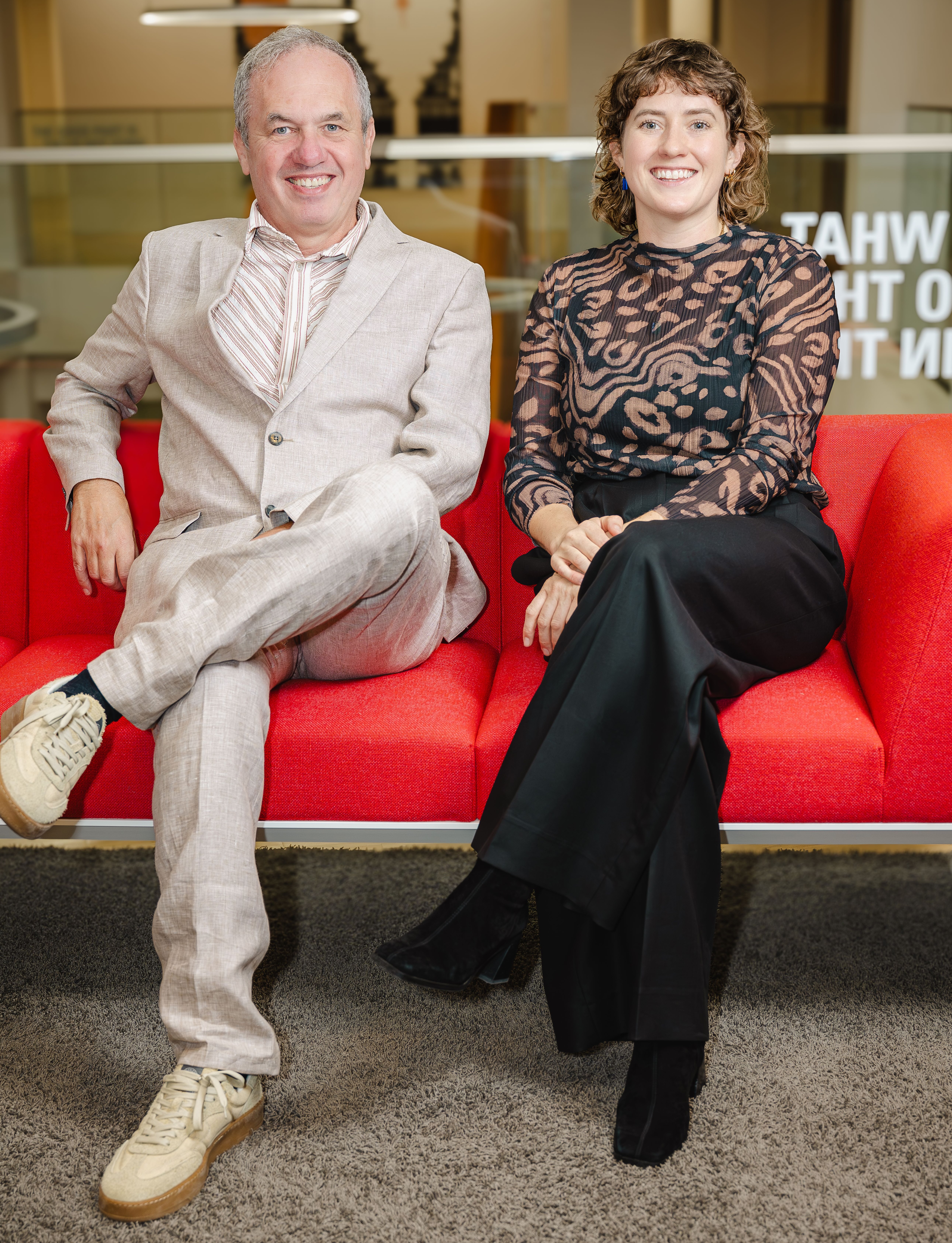 Anna Herrmann and Heinrich Jehle, co-founders of FlareOn Biotech, received the 2025 Baden-Württemberg Start-up Prize from the Sparkassen Finanzgruppe in recognition of their innovative sensor technology for tumour diagnostics. © Oliver Unfried, Leonhardt & Kern Werbeagentur GmbH
This sensor technology has been developed in collaboration with the University of Würzburg from 2022 onwards and has been successfully tested on real tissue samples in a clinical trial. This milestone led Dr. Anna Herrmann and Dr. Heinrich Jehle, both of whom hold a PhD in chemistry, to establish FlareOn Biotech in Frickenhausen in 2024. Both bring strong qualifications to the company, which they intend to develop further: Hermann has built an extensive international network in the life sciences sector, while Jehle contributes many years of experience in point-of-care diagnostics and patent law from his work at a major biotech company. "Baden-Württemberg offers excellent conditions for start-ups," says Herrmann, explaining their choice of location.
Herrmann further emphasises that practical application is the key driver in their work: "I enjoy research, but I also want to ensure that the results reach patients in a tangible way." To achieve this, the team is currently seeking partnerships in sales, pharmaceuticals and medical technology in order to secure its next round of funding and enable the technology’s broader clinical deployment.
